
Will Artificial Intelligence Help Us Sleep Better?
Sleep is not weakness. It is a daily dose of natural regeneration. And AI could help to leverage the underlying biology to helps us sleep better.

Imagine if all that goes along with sound sleeping, from breath to environmental sound, fed a single intelligence. That is, an Artificial Intelligence that analyzes how humanity rests, learns what makes us toss or dream, and brings that wisdom back to our bedroom to make us sleep better every night. This is not a dream (pun intended), but a new era of collective sleep coaching.
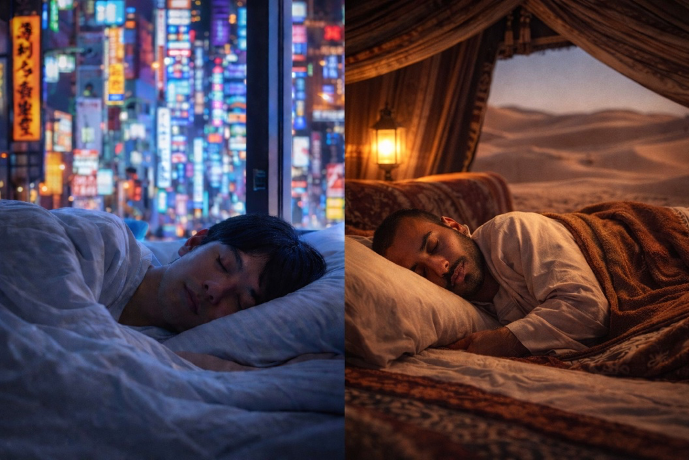
A third of us do not sleep enough
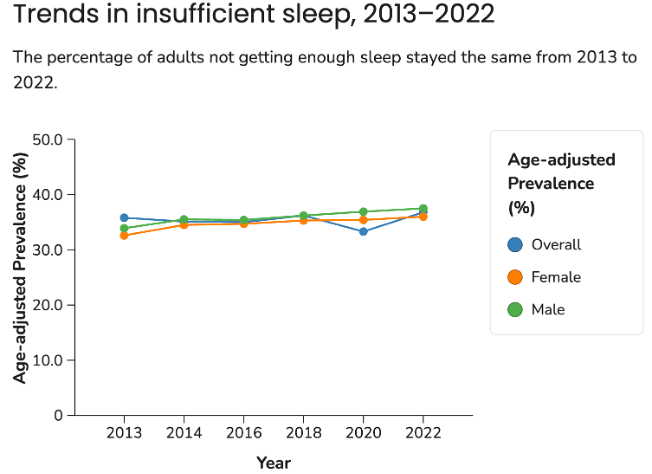
Sleep patterns are shaped by complex interactions among socioeconomic and behavioral factors, alongside physical and mental health conditions. They also vary geographically due to climate, green spaces, urban design, noise, and pollution. Cross-country comparisons help clarify how these contextual factors influence sleep duration and quality. A 2024 statistical report by the Behavioral Risk Factor Surveillance System (BRFSS) of the American Centers for Disease Control and Prevention (CDC) has looked at how much sleep U.S. adults get. Starting from the recommended amount of sleep for adults at least 7 hours each 24-hour period, it found a consistent mark of about 1/3 of people not getting enough sleep (studied from 2013 to 2022). With the exception of the state of Nevada, the eastern midwest and the east coast show a significantly higher prevalence of insufficient sleep. And the same appears to be true for children aged 4 months to 14 years, which also varies quite significantly by state, ranging from 25% in Minnesota to 50% in Louisiana.
Across Europe, sleep duration varies quite widely. The European Social Survey (ESS) multi-country adult data covers around 30 countries and includes self-reported sleep duration. It was used to examine short sleep (<6h), long sleep (>9h), and socioeconomic gradients that are frequently linked to wellbeing and mental health outcomes. Also, the European Health Interview Survey, which also cover 30 EU countries to include sleep duration and insomnia indicators was used to analyze geographic and socioeconomic differences in sleep. Combined, the studies consistently show that Northern European countries tend to report slightly longer average sleep duration, short sleep is more common in lower socioeconomic groups across countries, and that urbanization and work patterns influence sleep duration. More worryingly, a small study looking at sleep quality and duration in adolescents from Spain, Iceland and Estonia found that nearly 2/3 of boys and girls do not get the recommended hours of sleep (8–10 hs). However, a more comprehensive pooled analysis published in JAMA Pediatrics, assesses the proportion of children aged 3 to 4 years who met the World Health Organization’s recommended levels of sleep (and also screen time and physical activity) across 33 countries. It found that a substantial majority of preschool-aged children met the recommended sleep duration, with global estimates indicating that approximately 75–80% of children achieved this benchmark. Yet, compliance was not universal and differed significantly across income groups and geographic regions. The estimated proportion of kids meeting sleep duration recommendations were higher in European and high-income countries, and lower in the Americas and South-East Asia.
Bad sleep ain’t good
Sleep duration and quality is a critical determinants of neurological, psychiatric, metabolic, cardiovascular health. A meta-analysis linking sleep with cardiovascular disease and mortality published in 2019 , which pooled data from 19 studies (31 cohorts) involving over 800,000 people, they also found that short sleep was linked to about a 19% higher risk of cardiovascular disease mortality, and that long sleep was also linked to about a 37% higher risk of cardiovascular disease mortality. Moreover, these associations tended to be stronger in older adults and in some Asian populations. The generality of these findings has been confirmed by others. By contrast, for metabolic syndrome, short sleep duration was associated with an increased risk of developing it, whereas long sleep duration was not associated with a higher incidence of metabolic syndrome. When it comes to mental health, a survey of high school students indicates that both sleep durations of <8 or ≥ 10 hours are associated with a significantly increased odds of depression. Fasokun and colleagues posted a pre-print in 2025 with several conclusions. One is that short sleep (<7 hours/night) is strongly linked with worse mental health outcomes in adults, with a significantly higher likelihood of a depression diagnosis compared to those with adequate sleep. Short sleepers also experience more days of poor mental health per month. Two, people with insufficient sleep report more days of poor physical health than those with recommended sleep duration. Three, both depression risk and health day counts increase as sleep duration decreases. The authors suggest that public health interventions promoting healthy sleep habits might reduce the burden of depression and overall poor health across populations. When it comes to high body mass index (BMI) or obesity, studies appear to somewhat contradictory. For example, studies 1 and 2, report that short sleep duration in children is a risk factor for obesity. Other studies present a more nuanced conclusion, such as that short sleep duration is associated with increased chances of obesity among teen girls and boys, but the chances of obesity are lower among 6- to 12-year-old boys. In adults, some work conclude that both Iong sleep duration as well as short sleep duration predicts a higher risk of obesity. Yet, others seem to indicate a potential role of short sleep duration in predicting obesity, and that long sleep offers mixed results.
The literature on the topic is vast and cannot be entirely discussed here. Yet, the general conclusion should be that both too short or long shut-eye is generally detrimental to health. More broadly, poor sleep increases cardiovascular disease risk, higher diabetes and metabolic dysfunction, obesity and weight gain, depression and anxiety, cognitive impairment, immune dysregulation, and overall higher all-cause mortality.
Bad sleep is costly
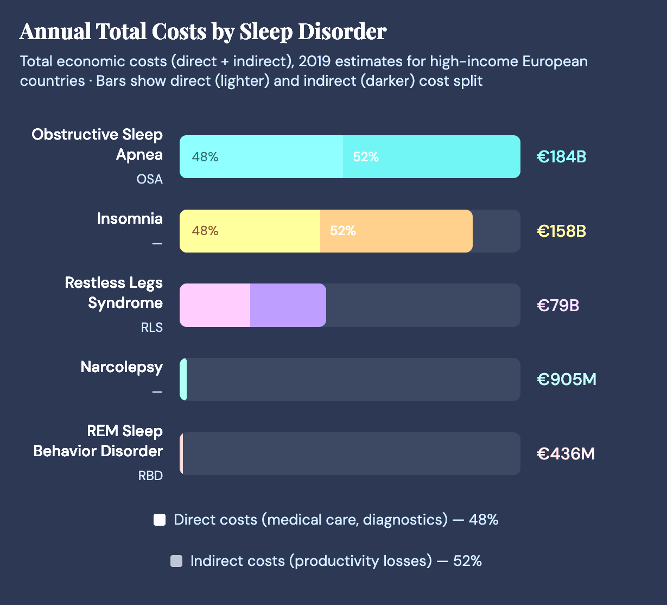
A very recent study systematically reviewed epidemiological and cost-of-illness data across 47 European countries for five major sleep disorders: obstructive sleep apnea, insomnia, restless legs syndrome, narcolepsy, and REM sleep behavior disorder. Harmonized data were drawn from publications between January 2010 to April 2023. Although economic analyses were limited to high-income European countries due to data availability, the study revealed a substantial societal burden of poor sleep. Just in 2019, the total annual costs attributable to obstructive sleep apnea alone were approximately €184 billion, €158 billion for insomnia, and €79 billion for restless legs syndrome. Direct costs that include medical care and diagnostics, accounted for 48% of the overall costs, whereas indirect costs (primarily productivity losses) comprised 52%. When aggregating these figures across high-income Europe, the study yielded an estimated burden of sleep disorders of around €423 billion, equivalent to a staggering 3% of the region’s combined GDP.
Can you feel the noise?
Then, considering the importance of a good night sleep, is there a way to help us sleep longer and better? Most of us would naturally think that a dark and very quiet room is the holy grail of good sleep. Counterintuitively, however, recent research discovered something different. People often sleep better with a low, constant hum. Like rainfall, a fan, or even a light whoosh from a noise machine. The reason boils down to pure basic neuroscience. Scientists call this auditory masking, and it’s surprisingly powerful. This is type of noise is called “pink”, as opposed to white. The difference is that white noise contains all audible frequencies with equal intensity. For example, a radio static, which creates a high-pitched hiss. Pink noise, by contrast, also covers all frequencies but with a much reduced power in higher frequencies. This generates a deeper and naturalistic sound. For completeness, there is also brown and blue noise, but there will not be covered here. People in noisy urban areas report falling asleep faster and waking less often. Also, hospital patients report better sleep and lower anxiety when treated to nature sounds or broadband noise. Even newborns respond to sounds. A 1990 trial found infants fell asleep twice as fast with white noise compared to silence. In 2013, researchers at the University of Tübingen wired sleepers to electroencephalogram (EEG) machines, captured their brainwaves in real-time, and played faint pink-noise pulses in sync with the peaks of their slow-wave oscillations. These are the big brain waves that dominate restorative sleep. The results were stunning. Not only the sound did not wake people up, it deepened their sleep and boosted their memory recall the next morning. Even older adults, whose sleep quality naturally declines with age, saw improvements. This closed-loop auditory stimulation, at the crossroads of neuroscience and technology, works like a pacemaker for the tired brain. Yet, although follow-up studies confirmed the finding, more recent work claim the opposite. This work exposed people to a rather loud environment (sound pressure levels between 45 and 65 decibels), to find that ear plugs were more effective than pink noise in helping people sleep. Therefore, one must take opposing conclusions with a grain of salt because different studies are often conducted in vastly different conditions. Nevertheless, the conclusion seems to be that pink noise may be sleep protective in some contexts, but ineffective in others. This begs the question: can we tailor the bedroom environment to be proactively personalized and contextual?
Say goodbye to the memory foam
But sound is only the beginning, and not even the most important elements in the armamentarium of our future smart bedroom, because the next frontier of sleep is not about the mattresses or pillow that remember your shape. Instead, it is about beds that respond to it in real time. Enter the thinking foam. Imagine an ultra-thin pressure and temperature sensors woven invisibly into the mattress or pillow fabric. They track temperature, posture, pressure points, and micro-movements with millimeter precision. Beneath them, networks of micro-actuators (air bladders, heating filaments, phase-change materials) adjust firmness and warmth in real time. And above it all sits an orchestration layer in the form of AI that interprets the multidimensional signals resulting is a bed that listens and acts. As you drift off, it may pre-cool your torso to help your core temperature drop. This is important because it is one of the strongest biological triggers for sleep onset. Simultaneously, it may gently warm your feet. When we are in deep sleep, it gets firmer under our lumbar spine to maintain alignment. If is detects a twitch, it redistributes pressure just enough to cradle our back into stillness. During REM, it may soften and warms our extremities. And just before waking, it subtly raises our torso and temperature, easing our out of dreams into waking rather than jolting us awake. Everything is coordinated, invisible, and importantly, adaptive.
Sci-fi?
Nope, because the tech already exists and it is slowly making its way into the market. Hooti, for example, is hoping to get us soon an AI-powered pillow to reduce snoring. Sound waves that are generated by us snoring travel through our skull bones to the pillow, where high-sensitivity sensors detect these bone-conducted vibrations, and an embedded AI chip processes and analyzes the signals in real time, identifying the snoring pattern and its intensity. Based on this analysis, a micro-vibrator activates and delivers gentle vibrations designed to prompt the user to subtly adjust their head position. As the head shifts, the airway opens, reducing or stopping the snoring. The system operates continuously, making real-time adjustments and learning from ongoing patterns to progressively improve its effectiveness. And, no! This is not getting silly. Moreover, at the recent Consumer Electronics Show in Las Vegas, companies showcased embedded smart tech into pillows and mattresses that claim to enhance sleep quality. Asian manufacturers are leading in this trend, producing cushions with built-in motors and sensors that track breath rate, sleep stages, movement, and noise via smartphone apps. A key focus is combating snoring and sleep apnea, which commonly disrupt sleep. Some notable products include the Motion Pillow from the South Korean company 10minds, which pairs motion-cushion hardware with an AI system to monitor snoring and body movements. When snoring begins, the system slightly inflates airbags to adjust the sleeper’s head position. This approach is backed by research showing that turning the head sideways by about 30 degrees can improve airway openness. German-based Nitetronic offers similar intelligent pillows that use multiple air cushion zones for subtle head repositioning. More advanced smart mattresses with dozens of AI sensors and airbags promise real-time support in which AI is shifting sleep tech from passive toward active, real-time intervention aimed at improving rest.
A lifelong sleeping AId
Then there is the wild edge of the sleep map. Imagine a bedroom having always-on sensors. Great. Now imagine millions of bedrooms equipped similarly. The sensors in every bedroom are not there to spy, but to capture the environment. These sensors feed an AI system, an agent, that notices the low rumble of traffic, the irregular bark of a dog, and the steady hum of air conditioning. Meanwhile, our smart watch or smart ring is streaming our heartbeat, micro-movements and skin temperature. The smart pillow and mattress sense our posture and movement. All these signals flow into the same AI agent, which then that acts by adjusting pillow, mattress and the soundscape to keep our brain in “the zone”. How could this work? First, the AI model learns about the room. It identifies patterns in sound frequencies and rhythms. It creates for your room, my room, and every other room a very specific sonic fingerprint. Then the system reads your vital signs and tells the AI agent if you are tense or relaxed. Also, when, how often and for how long you are in light sleep, deep sleep, awake or in REM. If it perceives a micro-awakening, it asks why, and here is when the magic happens. Because by combining what is happening outside and inside of your body, the AI agent starts to predict what is most likely to keep you dreaming and what may wake you up in the middle of the night. And because it is an agent, it acts upon them without us saying anything or even knowing. The AI agent may raise the pink noise by a few decibels to mask a sound that would otherwise will wake you up. Or it may smooth noise transitions so that your mind never notices the differences. When you are in light sleep, it may remain steady. In deep sleep, it may deliver faint, precisely timed pulses to reinforce your brain’s natural rhythms. And during REM, it may turn-off, letting your dreams run naturally. But this is not only happening while you are already asleep. Because the system may also produce sounds, like sea waves, a light rain, or a gentle tune to help you to fall asleep in the first place. And each night that passes becomes represents a teaching lesson to the agent, which by acting and acquiring information produces a training feedback loop. The agent learns if what it did helped you fall asleep faster, wake less often, and spend longer in REM stages. Over weeks, it builds your personal sonic recipe for a restful night. Over months and years, an AI sleep coach builds a digital twin of how you sleep. Not an average human, but You. It learns your chronotype, your sensitivity to noise, your response to late caffeine, stress, alcohol, or travel. It runs counterfactuals in the background. It may ask: what if bedtime were 45 minutes earlier? What if the room were two degrees cooler? Research already shows that multimodal models can predict poor sleep hours before it happens. Therefore, the leap now is real-time intervention. A sort of Netflix-level personalization for your circadian rhythm. The predictive models are not just reactive because experimental work demonstrate that AI models trained on behavioral and physiological signals before sleep (i.e., activity, HRV) can forecast sleep quality outcomes.
This is no longer science fiction. It is an extension of research already underway into the realm of the practical. Fundamental neuroscience and physiology research has made it possible and AI just makes it scalable, personal and safe. Sweet dreams.